Written by Dörte Nitt-Driesselmann and Jan Wedemeier, Hamburgisches WeltWirtschafts Institut (HWWI)
A large part of the European transport of goods takes place by ship. In order to be able to comply with international climate agreements, port facilities that provide the infrastructure for maritime activities must in future be operated more sustainably and with lower emissions. The prerequisites must be created in order to be able to reduce the local CO2 footprints at the respective locations.
Download the full article here
In 2019, 46% of the value of EU-28 exports and 56% of the value of EU-28 imports were shipped. Increasing global economic integration will lead to a further increase in sea trade. Without additional policy measures, emissions from international maritime transport are expected to increase by 23% by 2035 compared to 2015.
It is estimated that 2.5-3.6% of total global CO2 greenhouse gas emissions can be attributed to shipping. The share in terms of global nitrogen oxide and sulfur dioxide emissions is around 13-15%. Since ships are mainly operated with fossil fuels, they also emit other substances such as nitrogen oxides or particulate matter.
In 2011 the European Commission set out a roadmap with initiatives to improve mobility and reduce CO2 emissions in transport by 60% by 2050. In the shipping sector, emissions are to be reduced by at least 40%. In addition, a 50 percent shift of passenger and freight traffic over a medium distance from road to rail and waterway is planned. In 2015, the EU also adopted a strategy to gradually integrate marine emissions into EU policy. Since 2017, shipping companies have had to record relevant information on emissions resulting from shipping to and from ports and within the ports of the European Economic Area (EEA). The first emissions reports were due in 2019.
Ports are a crucial hub in the global transport chain. They must comply with the EU statutes for industrial infrastructure and companies and are operated in accordance with national regulations. There are currently no regulations of the EU Commission that explicitly deal with the CO2 footprint of ports or set savings targets to achieve the greenhouse gas emissions target by 2050.
In addition to the maritime infrastructure, ports also provide facilities for non-maritime activities such as power generation or industrial production at their locations. Formally and legally, however, a port is solely responsible for CO2 emissions inside and not for those outside the port area. Since the multi-functionality of the ports means that their effects on the local CO2 footprint cannot be limited to the port processes, the decarbonization of sustainable ports requires that green ports work in a resource-efficient and emission-saving manner in both mobile and stationary sources.
In addition to the large seaports, there are many smaller ports with regional economic importance in Europe. These ports face two specific challenges. On the one hand, the financial resources are often limited; on the other hand, they must be able to survive in competition among regional ports. This is usually done by specializing in special transports and project cargoes, the growth opportunities of which are favored by the increasing international division of labor and the corresponding realignment of value chains in entire industries.
One possibility for regional ports to develop innovatively is to position them as nodes for the consolidation of preliminary services and their possible final production. In this context, environmental issues are of great importance. Smaller ports have enormous development potential if they push ahead with the implementation of environmental protection measures.
Energy consumption in the form of fossil fuels is the main source of emissions in maritime transport. Replacing them with alternative, less emission-intensive energy sources offers the greatest potential for decarbonising maritime transport. But smaller regional, specialized ports can also make their contribution by working as green ports with both mobile and stationary emitters in a resource-efficient manner and operating intelligent management for this. Through suitable incentive systems, they can also contribute to reducing emissions outside their port area. For example, they can oblige providers of hinterland transport to comply with certain environmental requirements,
Ports have already taken significant sustainable development initiatives in recent years. Nevertheless, the challenges for fulfilling the climate agreement remain immense. It must be doubted whether the necessary decarbonization can be achieved through the current international CO2 trading system. The sectors involved must be expanded and the number of certificates traded must be reduced. As an accompanying measure, the introduction of a Pigou tax could also be considered. In order to set incentives for avoiding emissions, negative external effects for society resulting from economic activities are internalized and the polluter is taxed.
Download the full article here
With their second Sustainability Report, the port company Niedersachsen Ports (NPorts) is presenting the social, environmental, and future-oriented developments in the ports.
Press release: Oldenburg | April 7, 2021
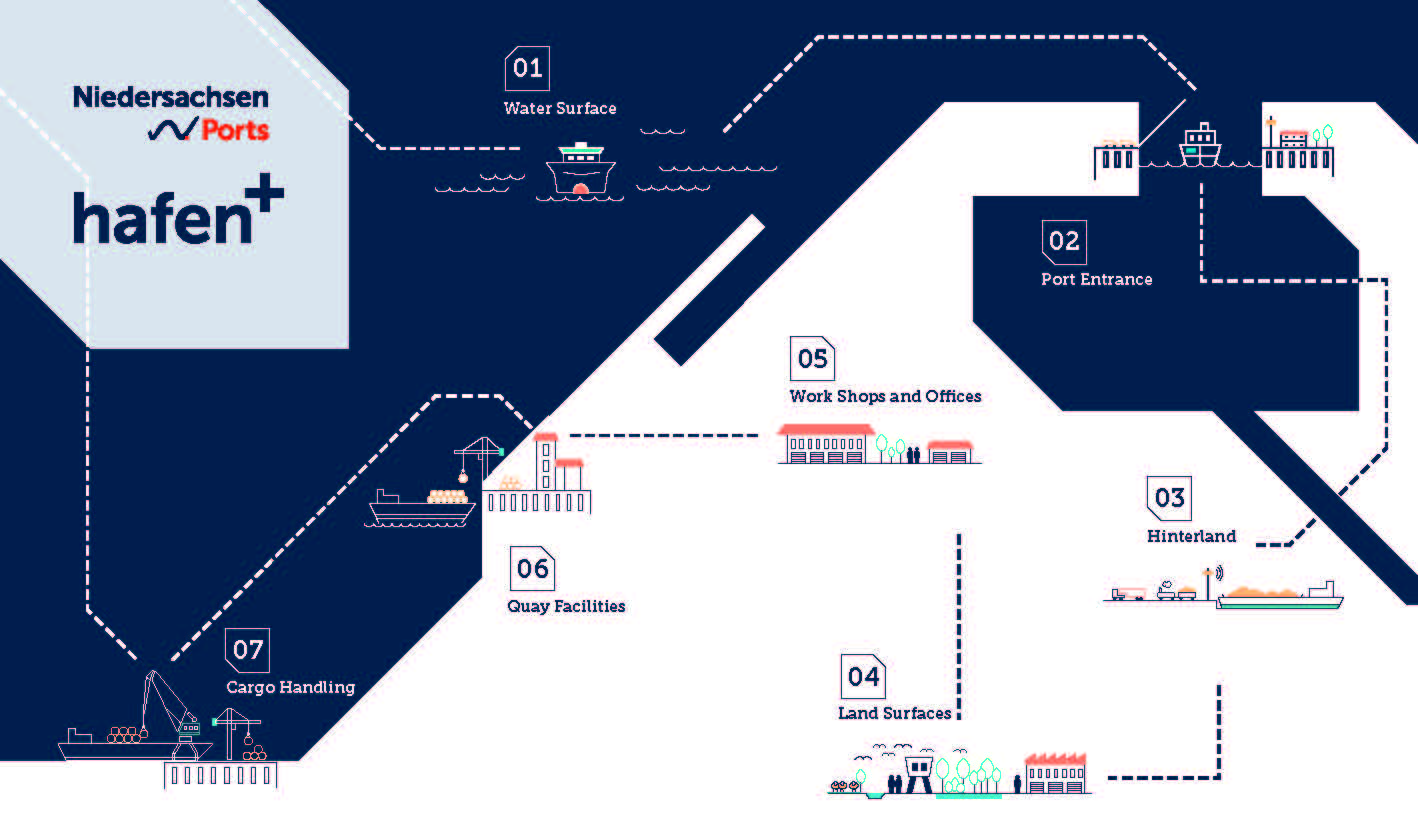
NPorts would like to invite you to a virtual and digital harbor tour. At various stations within the port, employees and customers are introducing sustainable projects. How do you manage to keep the ports navigable with the help of natural resources? What is being done to remove plastic from our ports? What is NPorts doing to make the arrival registration for ships more digital? These and other exciting questions are answered on our stroll through the port. The Sustainability Report will also give you an insight into the focuses of the sustainable activities, and on how the ports have developed in terms of goal parameters and objectives. And it is evident that: Sustainable, innovative projects do go hand-in-hand with a healthy business development.
Find the full Sustainability Report here
Get a digital tour of the Sustainability Report
Charting the Course Towards Climate Neutrality (Carbon Neutrality)
During the past years, NPorts has implemented a variety of measures in an effort to contribute to global climate protection. “Not only were we able to reduce our energy consumption dramatically, but also our CO2 emissions. We have already surpassed the halfway point towards our goal to reduce the climate gases by another 25% by 2025, and we are on the right track towards climate neutrality” explains Holger Banik, Managing Director of Niedersachsen Ports GmbH & Co. KG and of JadeWeserPort Realisierungs GmbH & Co. KG. We owe this positive development for instance to the gradual conversion of the lighting to energy-efficient LED technology, the streamlining and updating of heating facilities under environmental aspects, and to the conversion of our fleet of vehicles to alternative fuels. Even the composition of the electricity providers has an impact on the positive climate footprint. NPorts sources almost exclusively eco- friendly electricity and even produces some of it themselves, with the help of photovoltaic systems.
Innovative Projects in Every Port
NPorts works on many digital innovations and eco-friendly projects for future scenarios in a site and country transcending manner. In Brake, we are applying the smart software solution “dashPORT” that streamlines, visualizes, and analyzes energy consumption at the port. When detecting high consumption values, the system derives commensurate measures to reduce them. The project “SmartKai” (SmartQuay) in Cuxhaven comprises the development of a digital mooring assistance system for pilots and captains for the avoidance of averages. In this concept, sensors installed on the quay walls transfer data, thus supporting the ships’ navigators in their port maneuvers.
The project “DUALPorts” features probes to find and gently remove and clean up contaminated sediments. A commensurate pilot trial, where contaminated sediments are targeted and aerated, is planned for this year.
The test phase for a lighting control system at the Norden branch that ensures that the ports are illuminated in a demand-driven way was a success. In addition, a second photovoltaic system was commissioned in Norddeich.
In Wilhelmshaven, we have now three of the so-called “Seabins” in service that skim debris and oil residues from the water. By 2025, 25 of these ‘garbage cans of the seas’ are slated to be installed in the ports owned by NPorts.
Sustainability: Strategically Envisioned and Systematically Implemented
NPorts’ Sustainability Strategy hafen+ should be understood as an added value strategy for people, environment, and for the economic performance. Sustainability starts already with the (potential) employees. NPorts is invested in the reconcilability of job and family, and since 2018, we have been certified as a family-friendly employer. In order to strengthen NPorts’ employer brand, we created a comprehensive Career Portal and a corporate blog (Hafenpost) last year. Nowadays, environmental, social, and business topics are firmly anchored in all areas of the ports. This can also be seen in the successful re-certification for the environmental management system PERS (Port Environmental Review System) and for the quality management system ISO 9001:2015 during the reporting period.
In collaboration with the work group Niedersächsische Seehäfen (Niedersachsen Seaports), NPorts develops outlook papers for the ports on a regular basis to ensure the economic performance for the future.
The publication of the report enabled NPorts to develop a Sustainability Portal.
Under https://www.nports.de/nachhaltigkeit/hafen/ you can find the Harbor Tour and additional information about NPorts’ Sustainability Management in digital form. There, you will also find the current report.
Your Contact To Us:
Niedersachsen Ports GmbH & Co. KG Hindenburgstraße 26 – 30 | 26122 Oldenburg
T +49 (0) 441 35 020-310 | F +49 (0) 441 35 020-999
info@nports.de | www.nports.de
Niedersachsen Ports is owner and operator of five seaports, seven island supply ports, plus three regional ports along the Ge rman North Sea shore. The registered office of the company is in Oldenburg. Through the branch offices in Brake, Cuxhaven (with satellite location Stade), Emden and Wilhelmshaven, Niedersachsen Ports is managing the port infrastructure in the large seaports of the State o f Niedersachsen. In addition, the Norden branch operates the supply ports for the East Frisian Islands. This way, Niedersachsen Ports is able to offer a multitude of port locations from one single source.
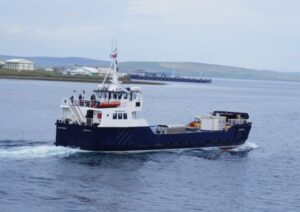 The very first cohort of seafarers to be trained to work on hydrogen powered vessels have been put through their paces on a new course in Orkney.
Five crew members from Orkney Ferries’ MV Shapinsay completed the course, equipping them with the necessary skills to work onboard the ferry when hydrogen, a zero-emission fuel, is used in the vessel’s system.
This follows on from an earlier course completed by the crew which focused solely on the handling of hydrogen as a cargo.
The new course, believed to be the first of its kind in the world, was developed and delivered in Orkney by Orkney College UHI’s Maritime Studies department in collaboration with Orkney Ferries and the European Marine Energy Centre.
Delivery of the course was supervised virtually by Maritime and Coastguard Agency (MCA) assessors who have now recommended the course and content for official recognition.
The world-leading course is the latest milestone in the HyDIME project – an Innovate UK funded project that will integrate hydrogen storage onboard the ferry operating between Shapinsay and Kirkwall, and trial hydrogen as a fuel in one of the vessel’s auxiliary engines.
The four-day course covered a range of theoretical and practical aspects relating to the use of hydrogen fuel on board vessels. This included storage under pressure, safe working practice around hydrogen gas, refuelling (also known as a bunkering), firefighting as well as operational and safety management procedures specific to the hydrogen equipment installed on the MV Shapinsay.
The last day, dedicated to practical training, saw the cohort take part in several practice drills for hydrogen bunkering and fire safety. Each crew member completed a hydrogen bunkering simulation using the training rig facility owned and operated by EMEC at the Kirkwall Pier Fuel Cell with additional support from Northwards, a local haulage company experienced in hydrogen transportation.
Crew members were also trained in how to detect hydrogen fires which are almost invisible to the naked eye by using thermal imaging, as well as the very specific ways in which fires are fought when hydrogen is present.
The new training will be a requirement in UK waters for working on vessels using hydrogen as a fuel and is an addition to existing international requirements under the IGF code (International Code of Safety for Ships using Gases or other Low-flashpoint Fuels).
Commenting on the new course, Mark Shiner from the Maritime Studies Department of Orkney College UHI, said: “This has been a great piece of local teamwork between the Maritime Studies department, Orkney Ferries and EMEC.
“According to the Zero Emissions Ship Technology Association this is a world first and we have cause to be very proud of that indeed.
“We’ve received some very encouraging messages from hydrogen organisations at home and abroad and enquiries from other European hydrogen vessel projects who are considering using our training.
“There is huge potential in hydrogen training, not only for seafarers but maintenance technicians, heating engineers, automotive engineers and others. I am looking forward to Orkney College UHI taking this agenda forward, building on what we have done so far.”
Working with a wide variety of partners from the rest of Scotland, UK and Europe, Orkney is playing a pivotal role in the development of green hydrogen technologies through a variety of projects including HyDIME, Surf N Turf and BigHIT, which will help in meeting carbon reduction targets and supporting the further development of renewable energy technologies.
Councillor Graham Sinclair is Chair of Orkney Islands Council’s Development and Infrastructure Committee. He said: “Orkney has a proud history of leading the charge to find innovative solutions to meet our energy needs – and here we see Orkney leading the way again with the approval of the hydrogen training course.
“While it is impossible to look into the future with any certainty, Orkney will continue to influence the low carbon energy landscape of tomorrow by demonstrating that it is possible to deliver positive outcomes with technology that exists today.
“Key to Orkney’s success in the energy industry is the ability for the public and private sectors to bring knowledge and experience together locally to reach a shared goal – and this project is a great example of that. I congratulate all involved.”
Notes to editors
HyDIME is focused on the use of hydrogen as a fuel in marine transport. The project will also gain the necessary marine licences and regulatory approvals for hydrogen to be used as a fuel in a marine environment which will have a significant impact on future hydrogen marine projects across the rest of the UK.
Hydrogen can be produced by electrolysis of water (H2O) by using an electric current to split water into its component parts of Hydrogen (H2) and Oxygen (O2). Production of ‘green’ hydrogen uses renewable energy to power to the electrolysis of water.
It is currently used for various applications such as chemical production, fertilisers for agriculture, rocket fuel and food production.
One of HyDIME’s goals is the design and physical integration of a hydrogen injection system on a commercial passenger and vehicle ferry which will be the first of its kind worldwide.
The hydrogen used in the HyDIME project will be cleanly produced from renewable energy. Excess energy generated from Orkney’s abundance of wind and tidal power will be used to produce hydrogen via electrolysis, resulting in carbon free, ’green’ hydrogen.
Looking to the future beyond the project, HyDIME will conduct a scale-up analysis, addressing key questions such as, “How much hydrogen and renewable energy would be required to fuel the Shapinsay ferry PLUS a fleet of hydrogen vehicles in Orkney?” and “Can this project be replicated in other areas of Scotland and the rest of the UK?”.
The HyDIME project will provide a stepping stone to accelerate and de-risk future hydrogen marine projects and will contribute towards growing the hydrogen economy in the UK.
More details – https://hydime.co.uk/
Written by Wim Stubbe, Lead Partner of DUAL Ports for the DUAL Ports Newsletter, December 2020
2020 has been an inhuman year for entrepreneurs and artists. 2020 has been a dangerous year for fundamental human rights. Populists and politicians have been constantly looking for scapegoats, while they have walked their mink coats with the blessing of an invisible power. 2020 has been a champagne year for speculators, prophets of fake doom and managers. The worshipping of the Holy Umbrella and the instauration of a tsunami of paper procedures have been blossoming in the light of the drones that enlighten the empty streets of Europe.
2020 has been a tough year for transnational cooperation. The exchange of views and the in depth analyses have been replaced by the compressed video-platforms, whereby everyone could enjoy his/her 5 minutes of internet fame. Human interactions and open conversations were no longer an option. Socrates turns around in his grave, as well as Carl Jacobsen and his father Jacob Christian Jacobsen. The best ideas are still born on the bottom of a beer glass.
2020 has been a promising year for the energy transition. The European Commission has been constructing some of the foundations for greening our societies and industries. But presenting high ambitions is not enough. There will only be food on the table in the winter if the work at the fields can be done in the summer. The drive for innovation within our SME’s is very much present, but very fragile. And they need the financial and entrepreneurial support in order to pass the valley of death, as well as strong networks to test their products before entering their markets. The battle is not won. Networking has become a cyclocross track, where only bikes with one wheel are allowed. And the opposition from the global industries is fierce.
2020 has been a promising year for the recognition of the diversified role of the ports in the world of sustainability. Ports are no longer these fossil rocks, that have taken away a stretch of the beach, moving boxes from one side of Europe to the other side. Several policy documents of the European Commission underline the multifunctional role of the ports and the port communities today. Together with the shipowners and industrial partners, ports are not only organising the logistic operations, but they also play an active role in the energy transition. This can go from facilitating bunkering-operations for zero emission fuels, to the set-up of plants to produce these kind of fuels. Also in the fields of waste-treatment and circular economy, the ports play a prominent role. And finally, some ports take a leading role in the development of the blue industry.
Let’s put the tasty food and wines of 2020 in our backpacks before taking the road to 2021. Let’s work on the restitution of our human rights and duties. And let’s work on the reconstruction of our networks with an open and entrepreneurial mindset. The roads in 2021 will be steep and promising.
Wishing you all inspiring celebrations at the end of the year 2020 and a soft landing in 2021.
Wim Stubbe, Lead partner of DUAL Ports and Port of Oostende
T: +32 487 548 768 | E: wim.stubbe@portofoostende.be
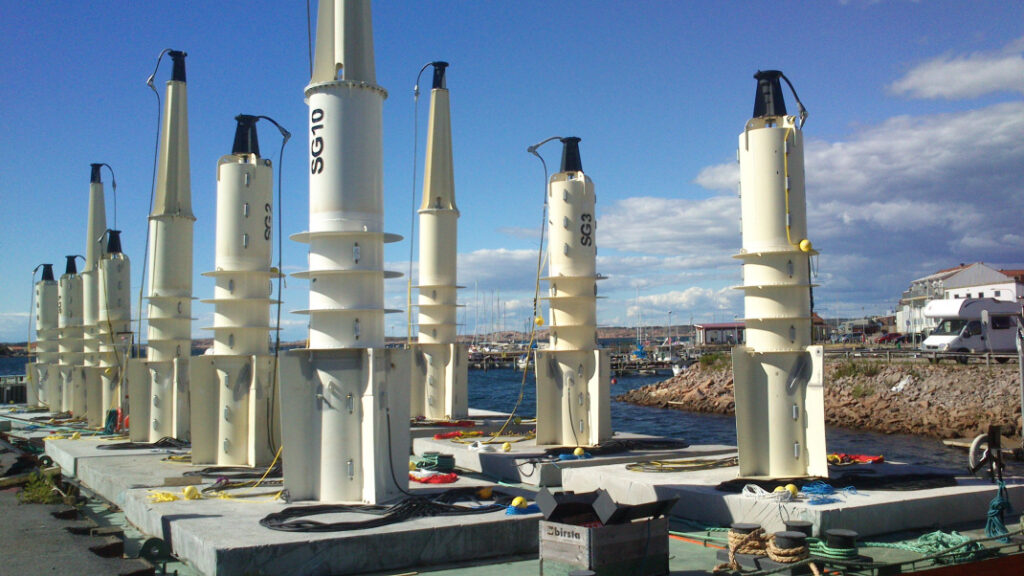 Ocean waves is an abundant yet untapped renewable energy source. Wave energy potential was assessed in a number of studies and has gone from 17 TWh/year based on a study done in 2007 to 92 PWh/year given in another study from 2016. This energy can be available at coastal areas where about 50 percent of the world’s population lives. For example, according to the International Energy Agency, world total electricity final consumption in 2018 reached 22.3 PWh.
Specially invented devices, called wave energy converters are used to capture energy from waves and to convert it to a useful electrical power. The history of development in wave energy field continued for more than 200 years. The first patent on a wave energy converter was registered in 1799 by Girard & Son in France. A new era for wave energy area started in the second half of the 20th century. First commercial WECs were used in observation buoys in Japan and later in USA from 1965. An active wave energy development started in 1970s due to the oil crises and was renewed in 1990s due to climate change and global warming. So far, almost 200 different concepts have been proposed, all of them are different in way they interact with waves, transmit this motion to a generator, different types of generator, electric power transmission, etc.
Despite a long history of wave energy development, wave energy sector is not fully mature yet and can be considered as emerging. While some of the projects and concepts have become a history (TapChan, Wavedragon, LIMPET, Pelamis, Aquamarine Oyster and some others), new technologies are getting more attention and continue active development: CorPower, OE Buoy Ltd, WaveRoller, Wello, Wavepiston, Floating Power Plant, Seabased, Eco Wave Power and many others. Some of them have reached relatively high technology readiness level and have been demonstrated at a full scale in real offshore environment, others are still at a lower technology readiness level and have been tested in a smaller scale or in a protected / controlled environment.
The Offshore Renewable Energy Policy recently announced by the European Commission promotes not only offshore wind (bottom-fixed and floating) but also other ocean energy technologies among which wave energy technologies are included. The motivation is that the European companies working with, particularly, wave energy technologies are currently the forefront and have a potential to contribute to the future renewable energy system by 2050. 40 GW of ocean energy will complement offshore wind by 2050.
Ports are an integral part of global trade and commerce which are known for operating and handling large scale operations which consume sizeable amounts of energy. Port authorities and terminal operators are constantly looking for ways to reduce their fuel bills and carbon footprint. Wave energy converters placed in a proximity of ports or integrated in port infrastructures such as breakwaters can help to produce renewable energy for port needs.
For more information please contact:
Irina Temiz, Senior lecturer/Associate Professor at Department of Electrical Engineering, Division of Electricity, Uppsala University, Sweden
T: +46 70 4250552 | E: irina.temiz@angstrom.uu.se
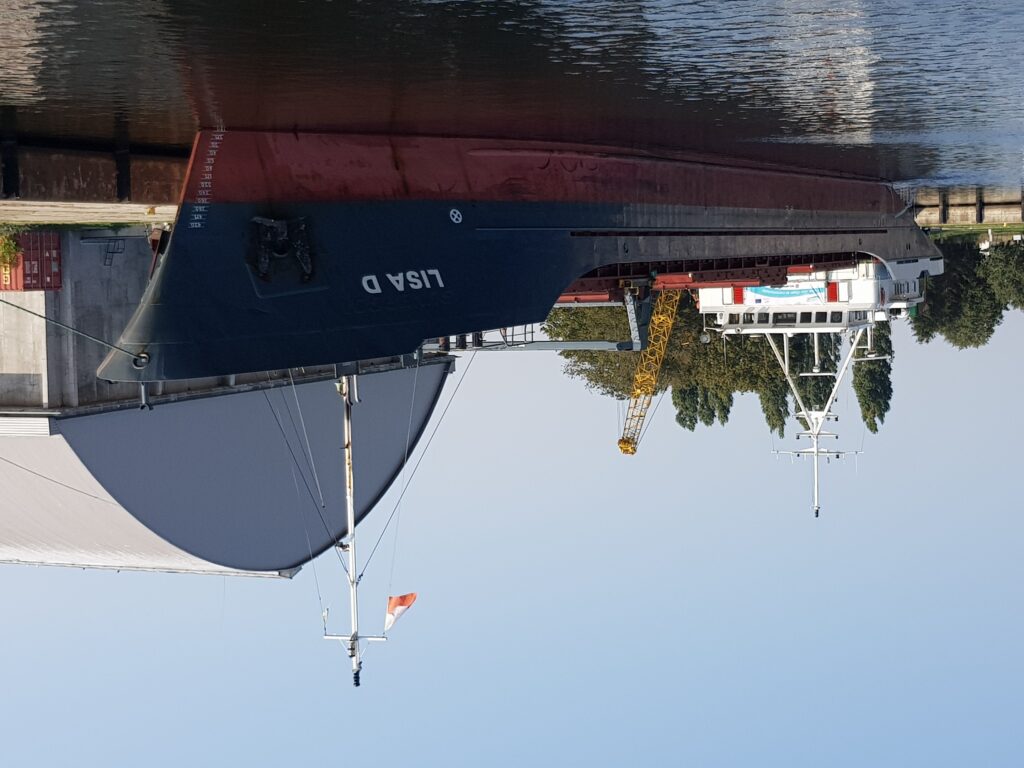 On 9.12. 2020, the EU Commission has launched its new Mobility Strategy, entitled “Sustainable and Smart Mobility Strategy”, whereby zero-emmission ports and Short Sea shipping are 2 of the pillars.
Also SME and regional ports play an important role in the implementation of this strategy. Considering this new EU strategy, the EU projects InconE60 and DUAL Ports have decided to work together, linking SME and regional ports in the North Sea and the Baltic Sea. Whereby Dual Ports is more focusing on the integration of innovative and sustainable zero-emissions solutions in port management, InconE60 is focusing on the promotion of Short Sea Shipping in order to reduce the CO2 level of logistics. Both ports of Oostende and Vordingborg are partner in these projects.
The InconE60 project aims to develop a concept to launch regular navigation along the international E60 waterway and connect it to the network of other inland waterways – E30, E40 and E70. The idea will cover technical, economic, ecological and social aspects to achieve the best possible economic effects.
The project investigates transport solutions supporting the active development of the peripheral coastal regions of the South Baltic area, focusing on local ports as development centres. It will help increase the competitiveness of the Baltic Sea region and increase its accessibility and attractiveness. One of these solutions will be an open model of cargo flow in the South Baltic region, which will be addressed in particular to the business sector – cargo operators, logistics forwarders and other transport entities operating in this area.
The main results of the INCONE60 project will be:
- A comprehensive report on the current economic and social situation of regions under the influence of local ports of the South Baltic and in some parts of the North Sea Region. The report will contain the results of detailed research and analyses of the transport system and transport infrastructure in the region (roads, railways, inland waterways, port infrastructure). The study will also cover the analysis of cross-border cooperation of local ports, investment and development needs and development barriers.
- Computer model of cargo flow in the South Baltic region and North Sea region. The purpose of this model will be to show the current load distribution, organised by the transport sector and to present an alternative possibility of a modal shift of some cargo to sea-river and SSS transport modes
- As part of the project, pilot trips will be carried out, the most important of which will be on the route Oostende (Belgium) – Klaipeda (Lithuania) in 2021. The cargo ship will call at Belgian, Danish, German, Polish and Lithuanian local ports. Its purpose will be to show the possibilities of transporting cargo along the International WaterWay E60.
For more information please contact:
Wim Stubbe, Lead partner of DUAL Ports and Port of Oostende
T: +32 487 548 768 | E: wim.stubbe@portofoostende.be
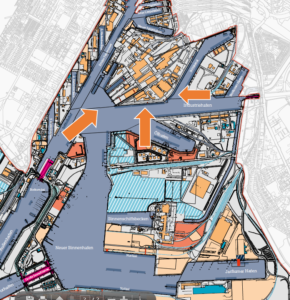 Contaminated sediments are a major challenge for ports. In some parts of the port of Emden in Germany, the sediment is polluted with environmental pollutants. This prevents the use of water depth preservation measures and thus the long-term use of certain parts of the port. Therefore, the Sediment pilot within DUAL Ports is looking at an innovative and sustainable concept for the removal of pollutants in the sediment, in order to keep the port attractive to customers and maintain port operations there in the long term.
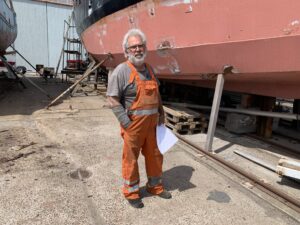
Within this pilot, a pollutant cadastre was developed in 2020, which provided information on the local pollutants. For this purpose, 17 deep boreholes were carried out from which a total of 62 samples were taken and analysed (the project area is in the area of the shipyard sites, see picture). The pollutant register is the basis for the development of innovative approaches within DUAL Ports. The aim is to clean up the sediments as locally as possible and, if necessary, make them usable e.g. in port construction. Students from Leibniz University are also involved in developing approaches together.
One pollutant is to be cleaned locally in a pilot test: TBT (tributyltin) which is an additive from anti-fouling paint degrades when in contact with oxygen. The test is planned for 2021 and is intended to provide information on the extent to which the large-scale degradation by aeration of the sediments is successful.
For more information please contact:
Matthäus Wuckowski, Sustainability Manager at Niedersachsen Ports GmbH & Co. KG
T: +49 170 1644219 | E: mwuckowski@nports.de
The pilot project’s objective is to prove that wind propelled cargo transport via a modern specifically designed sailing cargo vessel, SV Lo Entropy, is cost effective and viable – and the future for achieving the goal with SV Lo Entropy is set.
Celtic Cruises aims to transform the way that road transport cargo, short sea containerized and palletized cargo is moved cost effectively with a reliable, fossil fuel free.
“We are changing the configuration of our cargo sailing vessel, SV Lo Entropy. The work will increase our hold capacity to enable the ship to carry 76 Euro pallets or approximately 50 tons equal to 2 of the largest capacity EU truck loads – 38 Euro pallets/24 tons per vehicle and more than the capacity of 3 forty foot containers). We have to set this goal as to fit into land transport’s, or road, and short sea transport’s supply and logistic’s chain, using a common transport unit size; the Euro pallet. This will allow not only for an efficient intermodal transport operation, but will be price competitive with these other transport modes besides being truly environmentally friendly and emissions free transport mode,” says Geoff Bourne.
Th SV Lo Entropy will, after the transformation, have the ability to undertake 468 voyages per year (234 voyages in each direction) carrying at full capacity – a total of 23, 400 tons or 35, 568 Euro pallets (120 x 80 x 146 cm high). Each voyage cycle (loading, sailing and off-loading) will be of an 18-hour duration allowing for 36 voyages every four weeks. Furthermore, SV Lo Entropy can transport 12 passengers in four cabins.
The SV Lo Entropy is expected to be ready for sail with full cargo for the first tim in May; its first green transport cargo via wind propelled sailing cargo vessel and the route is Oostend-Ramsgate.
No fuel, no emissions
Further, and as a secondary goal, Celtic Cruises is in conversation with other parties in designing and implementing an absolute zero emissions transport mode, a “no fuel, no emissions” concept. The aim is to produce and store hydrogen via onboard renewable energy sources; hydro (from the free spinning propeller whilst under sail), wave/flap technology, wind and solar renewable energy, and then via either a fuel cell or a converted combustion engine to use this stored hydrogen for propulsion and all domestic vessel needs. Discussions are ongoing, and should this aim be achieved, a suitable update will be released.
For more information please contact:
Geoff Boerne, director of Celtic Cruises
T: +45 53 55 50 80 | E: loentropy@gmail.com
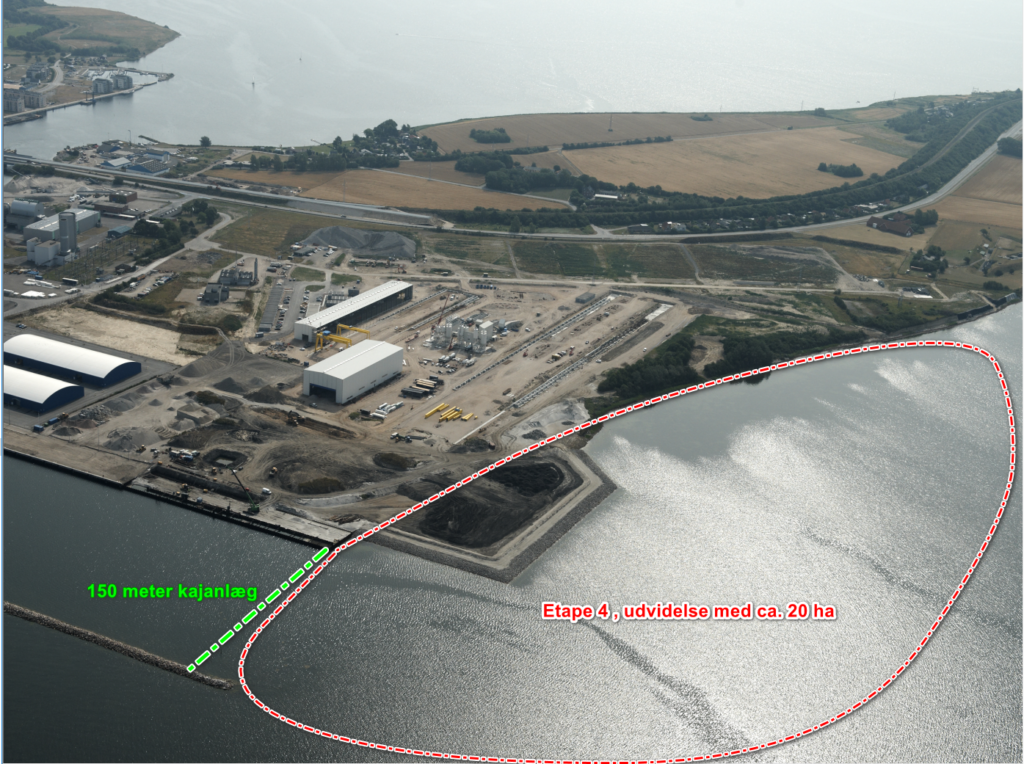 A unanimous and visionary port council recommended the initiation of yet another port expansion, which has been approved by the local municipal council of Vordingborg. The tender business was commenced in autumn 2019 with an expected start of the actual construction work in 2021.
Stage 4 of the port expansion is a land reclamation project that will expand the port area by approx. 200,000 m2. In addition, a quay facility of approx. 150 m will be built. Today Vordingborg Port has approx. 180,000 m2. The new project will result in more than a doubling of the existing land.
Since the costs of establishing Stage 4 are covered through payment for receiving the soil, the port does not have to raise loans.
A recovery project
The project is to contain the area and subsequently fill it up with soil and recycled products from other construction projects. Today, huge amounts of soil and other industrial residual products are generated from the many construction projects around Denmark. By establishing a recovery project in South Zealand, companies in the municipality and in the area will have easier access in terms of getting rid of soil close to their construction projects. Vordingborg Port has an extensive experience within recovery projects, as the port has been a partner in the EU Interreg project DUAL Port. Stage 4 is part of the original master plan and is therefore a natural extension of these experiences. In the recently completed port expansion, a number of recycled products were also used.
Business and maritime hub
The latest port expansion finished in March 2019 which has led to investments from local businesses in port terminals, machines and manpower. In 2013 there were only few employees – now the Port of Vordingborg employs 40 persons. Just a few years ago, there were 3 companies on the port area – now there is 13 different companies within the business of exporting and importing feed, grains, fertilizers and raw materials among others.
With the further port expansion there will be room for more new companies and in the spring 2021 a new gas station will be build on the port that can provide further service.
For more information please contact:
Jan-Jaap Cramer, Port Director in Vordingborg Municipality, Port of Vordingborg
T: +45 24 76 41 93| E: jjcr@vordingborg.dk
Written by Madadh MacLaine, CEO at Zero Emissions Maritime Technology Ltd
Zero Emissions Ships (ZES) are possible today. However, zero-emissions shipping is not. Why? Because although we have the technology but policy, economics, and a lack of green hydrogen stand in the way. Fortunately, the regulatory and financial landscapes are rapidly changing, putting zero emissions (ZE) vessels and green hydrogen infrastructure on the near horizon.
To be in line with IPCC recommendations of 1.5, shipping will need to be zero emissions by 2034.
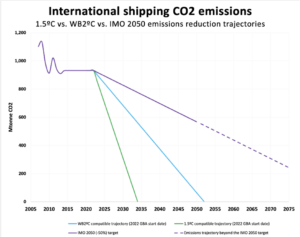
To achieve this shipping requires (1) a zero GHG fuel that can be used in existing vessels, (2) Zero Emissions Ship Technologies (ZEST) that can be retrofitted to existing vessels, and, most importantly, (3) all vessels designed from today should be zero emissions, or at the very minimum, must be zero ready. Especially given that vessels designed today, under normal circumstances, will be in service after 2050.
The good news is that we have the technology. However, much of the tech is pre-market and therefore requires a shift in the regulatory environment as well as increases in development and seed funding to become widely available.
A holistic approach
A fully Zero Emissions Ship (ZES) necessitates a holistic systems approach, incorporating many technologies that are available on the market but not currently being used in commercial shipping. In this article, I look at some of the design features and technologies required for a ZE self-fuelling water carrier that could compete in the current market with minimum negative impacts on both human and environmental factors, considering; pollution, stability, vibration, and noise.
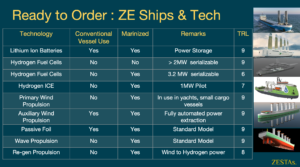
The keys to achieving zero emissions in the current environment are (1) a zero-emissions fuel, (2) efficiency measures that reduce the fuel required to propel the ship, (3) assured ZE fuel supply and (4) operational measures; speed reduction, weather, and current routing.
Fuel reducing energy efficiency features
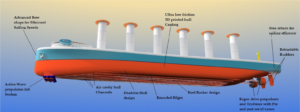
An aero and aqua dynamic hull design will reduce drag. An air cavity in the bottom of the hull reduces friction with the added benefit of creating buoyancy when the vessel is laden. The air is released when she is in ballast reducing the need for ballast water.
Using the energy of the environment to reduce fuel
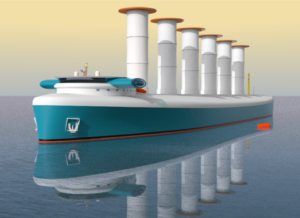
Wind, only being pre-dated by oars, is the oldest form of ZE propulsion in shipping. But modern wind propulsion technology (WPT) has more in common with The Americas Cup, airplanes, and baseball; the market-proven Flettner rotor using the same spinning Magness effect as the proverbial curveball.
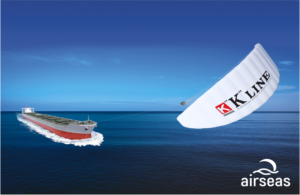
Other WPTs entering the market are Airbus spin out, Airseas Seawing, pictured here on a K-Line vessel.
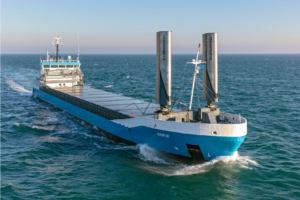
And also the suction wind, conceived in 1980 by Jacques Cousteau. Below we see the Econowind collapsible Ventifoil installed on the 3638 DWT general cargo carrier, Ankie.
An essential design feature of the self-fuelling ZES is that, whatever the wind propulsion system used, it must be oversized to ensure excess power for onboard hydrogen production.
The ship will also use the commercially proven wave propulsion system installed in her bows.
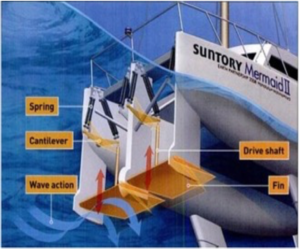
This system absorbs the energy of the wave into a rocking motion which propels the ship forward. A passive foil propulsion system will be mounted in her stern, converting the energy of the wake into forward thrust. This has the added advantage of reducing wash water impact on Coastal ecosystems.
The GEPS role damping power take-in system has the double advantage of both stabilizing the ship in heavy weather and bringing the energy of the sea into the ship’s system.
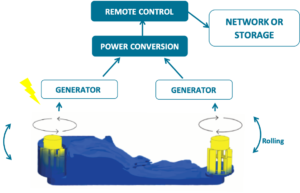
The ship will trail a water turbine when she is under wind power to bring power into the energy system. The captured renewable energy will go first to the battery bank followed by water electrolysis when the battery bank is full.
By reusing the water generated by the hydrogen fuel cells we have calculated an efficiency of ~40%.
The onboard hydrogen generation system has been proven on the Energy Observer with registered hydrogen production system efficiencies of 42%.
Both hydrogen fuel cells (HFC) and water electrolyzers, that produce hydrogen, have been used by the military in marine applications for over fifty years. Nedstack first installed an HFC in a civilian vessel in the 1980s. HFC manufacturers Nedstack, Powercell, and Ballard are all in advanced stages of designs for marinized >3 megawatts (MW) systems. ABB and HDF have plans to build 3MW power plants for ocean-going vessels based on the fuel cell power plant which was jointly developed between ABB and Ballard. Powercell is installing a ~3MW system in the 102-meter yacht pictured below.
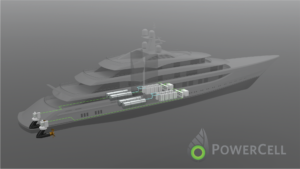
HFCs, being solid-state, can be serialized.
By the time the >80,000 DWT self-fuelling water carrier has gone through designs and is ready to build, serializable 3MW hydrogen fuel cells will be market-ready and able to provide the 21MW of required power.
Fuel is the highest cost in the bottom line of vessel operations. By virtually eliminating the cost of fuel from the bottom line, a ship can afford to operate at the reduced speeds, current and weather routing required to be self-fuelling. Although the CAPAX will be much higher than for a conventional vessel, this ship will be “bomb proof” in the coming regulatory market, holding its value past 2050.
For more detailed information, visit the Zero Emissions Ship Technology website, contact admin@zestas.org or Madadh MacLaine on Linkedin.